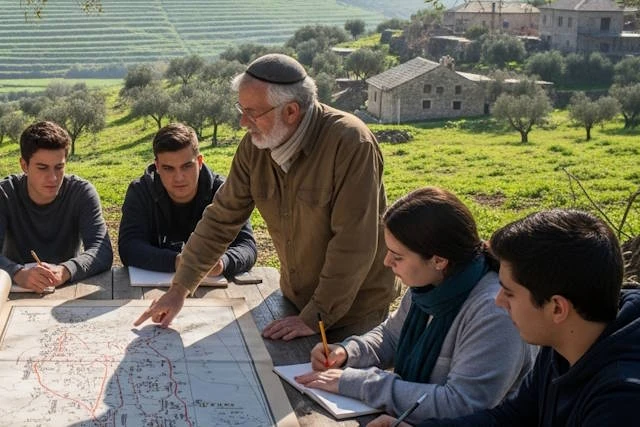

The Desire to Ask Matters More Than the Answer
The habit of asking questions builds curiosity‚ independent thinking and self-confidence and turns learning into a real conversation.

Choosing Curiosity as a Way of Life
The ability to ask questions comes from genuine curiosity. It is not only an innate trait but an approach to life. Someone who looks around and asks "why?" or "how?" is not just looking for technical knowledge - they want to understand the connections‚ meanings and possibilities behind things. Curiosity drives constant learning‚ even outside formal settings. In a dynamic world where knowledge keeps changing‚ it is the ongoing question that keeps a person connected to depth and not just to momentary information.
The Link Between Questions and Independent Thinking
Questions are the way every person builds independent thought. When students or employees settle for ready-made answers‚ they lose the ability to examine and understand. But when they ask - even questions that seem simple - they exercise judgment. Independent thinking grows out of the courage to ask‚ even when it is not clear there is a right answer. This is learning based on inquiry‚ not imitation.
Choosing an Environment That Encourages Questions
For questions to really be asked‚ a supportive environment is needed. An education system or workplace that values only correct answers teaches obedience‚ not curiosity. When a question is valued no less than the answer‚ an atmosphere forms in which it is fine to make mistakes‚ explore and think out loud. Teachers‚ managers and mentors who strengthen the power of the question turn learning into a conversation rather than a test.
The Link Between Questions and Innovation
Every great innovation was born from a question. "Why is it this way?" or "Is there another way?" are phrases that led to enormous changes in science‚ art and technology. Whoever stops asking stops moving forward. The desire to ask again and again - even when it seems everything has already been said - is what keeps humanity in motion. A question challenges the obvious‚ and in doing so opens a door to something new.
Choosing to Listen to the Process of Inquiry
A real question is not only an act of speaking but also of listening. When you learn to ask well‚ you also develop the ability to listen - to the answer‚ to a different opinion or even to silence. This listening creates a process in which every question leads to another. Instead of rushing to close the circle‚ it opens it. It is an endless process of growth in which inquiry itself becomes a way of life.
The Link Between Questions and Self-Confidence
Some people mistakenly believe that asking many questions shows a lack of knowledge. In fact‚ it shows confidence. Only someone who feels secure dares to ask without fearing they will look like they do not understand. In a world where many hide behind ready-made answers‚ a question is an expression of courage - the courage to admit we do not know everything and the courage to search together.
Choosing Open Questions Over Closed Ones
While closed questions lead to short answers‚ open questions open up whole worlds. "How does this affect things?" or "What can we learn from this?" spark discussion‚ emotion and thought. In education‚ at work and in personal life‚ open questions are the ones that create human connections and encourage broad thinking. They turn every conversation into an invitation to understand more.
The Link Between Questions and Values
The questions a person asks reflect what matters to them. When people ask about justice‚ truth or meaning‚ the questions themselves become an expression of identity. Through questions‚ a person's inner compass becomes clear. In education systems and organizations too‚ the kind of questions that are raised reveals the existing culture: whether it is purely technical or also value-driven and emotional.
Choosing Mistakes as Part of Learning
The desire to ask also involves accepting mistakes. Any question can lead to a dead end‚ but learning happens there too. Real understanding grows not only from precise answers but from repeated attempts to ask again. Questions act as a compass that points the way‚ even if the road is long. A mistake is not a failure - it is a natural stage on the way to discovery.
The Link Between Questions and Collaboration
Questions connect people. The moment someone asks‚ the other person feels part of the search. A group that asks together becomes a learning community - a place where knowledge is built through dialogue rather than hierarchy. Questions build bridges of understanding because they invite dialogue‚ not argument. Instead of arguing about who is right‚ everyone becomes interested in what they can discover together.
Choosing Teachers and Leaders Who Ask Themselves
Real leaders are not the ones who have an answer for everything but the ones who know how to ask the right questions. When a teacher‚ manager or parent asks - and does not only answer - they model open thinking. Their authority does not come from absolute knowledge but from the ability to stimulate thought in others. In this way‚ a question becomes not only a learning tool but also a leadership tool.
In Summary
The desire to ask matters more than the answer because it is what keeps the world in motion. It reminds us that every answer is temporary and that every piece of knowledge is a gateway to the next question. One good question can change a life‚ inspire‚ open a conversation or set a process in motion. In an age of too many answers‚ the question has become the bravest act of all - and it is what preserves humanity‚ curiosity and the possibility of truly learning.