

The Silence That Makes Real Learning Possible
Why quiet‚ a slower pace and a calm environment help students focus better‚ understand more deeply and remember for longer.
Choosing to Slow Down as a Basis for Understanding
The speed at which information is delivered today creates an illusion of learning‚ but not necessarily of understanding. Slowing down - not in the sense of laziness but of awareness - allows depth to exist. When you take time to sit quietly with study material‚ read a sentence twice or simply breathe between tasks‚ real processing of knowledge becomes possible. Silence keeps information from "leaking" out quickly and gives the brain the chance to form new connections. It is a process in which learners not only understand more but also remember for longer.
The Link Between Silence and Creative Focus
Creativity isn't born from noise - it needs space. When background noise subsides‚ new ideas emerge. Teachers‚ lecturers and students who allow themselves a few minutes of silence discover that their thoughts fall into place‚ new associations arise and solutions come naturally. Silence is not empty; it is fertile ground in which creativity can sprout. It gives the brain an opportunity to think‚ not just to react.
Choosing an Environment Free of Distractions
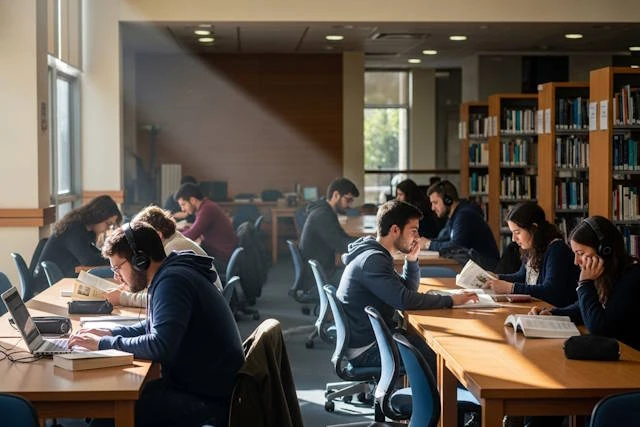
The physical environment directly affects the ability to concentrate. Background noise‚ overly bright light‚ pop-up notifications - all of these break the inner flow of learning. Creating a quiet‚ orderly environment lit by natural light brings a sense of calm. It is not only about acoustics but also about a feeling of well-being. A room with order‚ a pleasant scent and few items is a place where learners can devote themselves to thought. The outer environment reflects inner quiet‚ and vice versa.
The Link Between Silence and Inner Dialogue
When there is no outside noise‚ inner listening becomes possible. Silence creates the conditions for self-awareness - for moments when learners can ask themselves what they really understand‚ what is missing and what intrigues them. This is learning based not on copying or memorizing but on listening. Within silence authenticity is born‚ and learners discover that they are not just absorbing information but processing it in their own unique way.
Choosing a Balance Between Silence and Voice
Silence is not the opposite of speech but a balance to it. In a healthy learning system‚ moments of silence are just as important as group discussion. When there is room for silence‚ the words spoken after it carry a different weight. New teaching methods embrace this idea - giving learners a moment to think before they answer‚ allowing time for processing after a lecture and building natural pauses between parts of a lesson. This is how the human rhythm of learning is built‚ a rhythm in which mind and heart work together.
The Link Between Technology and Silence
Although technology is sometimes seen as a disruption‚ it can also help create silence. Apps that limit notifications‚ institutions that introduce "minutes of silence" in the middle of online lessons‚ or software that tracks focus time all make it possible to manage the noise instead of surrendering to it. Digital silence becomes an inseparable part of inner silence when control over technology returns to human hands.
Choosing Teachers Who Listen
Silence doesn't concern only learners - it starts with teachers. A teacher who truly listens and leaves the student room to think creates a safe environment in which every word is heard. Such listening is based on the understanding that silence is not emptiness but presence. Once the teacher doesn't fill every pause with talk‚ space opens up for self-directed learning‚ questions and curiosity. In this sense‚ silence becomes a genuine educational tool.
The Link Between Silence and Emotional Calm
Real learning doesn't happen when the mind is in turmoil. Silence allows not only concentration but also emotions to settle. Schools and workplaces that build moments of silence into the day report less stress and an overall sense of calm. When body and mind are at ease‚ the brain is more open to taking things in. Silence is not a luxury - it is an essential need in a noisy age.
Choosing a Routine with Moments of Stillness
For silence to become part of life‚ it has to become part of the routine. It can be a short ritual at the start of a lesson‚ a brief walk before studying or simply a mindful breathing pause. Regular moments of stillness strengthen the sense of control‚ create inner calm and allow a focused return to the material. Silence very quickly becomes a habit that feeds the ability to concentrate.
The Link Between Silence and a Learning Group
Group silence is a special experience. When a group of people is silent together‚ a shared space of concentration forms. Each person is within themselves‚ but the overall feeling is one of unity. Where such moments become routine - in lessons‚ lectures or meetings - there is a noticeable rise in the quality of discussion and in mutual respect. Silence creates a sense of partnership.
Summary
The silence that makes real learning possible is not just a state of quiet but one of full presence. It creates room for listening‚ understanding and creativity. In a world full of noise‚ silence is a conscious choice‚ not an absence of action. It is a reminder that learning is not a race after information but a journey of discovery. When you let silence into your routine‚ a new depth is revealed in learning and‚ in fact‚ in life itself.