

The Moment a Child Chooses to Share Something Without Being Asked
When children open up on their own‚ it is a sign of trust that parents can nurture through listening‚ patience and unconditional acceptance.
Choosing Sharing as an Emotional Act
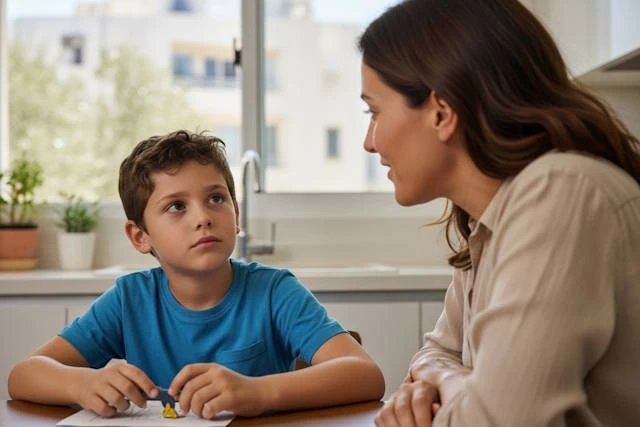
When a child tells you something on their own initiative‚ it is not just an act of speaking but a deep inner expression. They feel that their words are worth listening to‚ that their experience is interesting and that the response they get will be understanding rather than judgmental. In that moment a delicate emotional connection forms - the child is not only sharing information but asking for closeness. Sharing is an expression of trust‚ and sometimes also a hidden request for help or support.
The Link Between Emotional Security and the Desire to Share
Children do not open their hearts in every environment. Their need to feel protected is a basic condition. When there is real acceptance at home - when they know that even if they made a mistake they will not be judged‚ and even if they say something difficult they will not be rejected - room opens up for spontaneous sharing. This security is built over time through small responses: a calm tone of voice‚ a look that expresses presence and avoiding hasty conclusions.
Choosing Active Listening‚ Not Interrogation
Many parents ask questions out of concern - how was it? what happened? who were you with? - but sometimes the questions themselves close the door instead of opening it. Real listening begins with silence. When a parent is simply present‚ without piling on words‚ the child feels there is space to talk at their own pace. Once they understand they will not be interrupted and their words will not be judged‚ they choose to share more and more.
The Link Between Your Response and the Way a Child Shares
The moment after sharing matters no less than the moment it happens. If a child tells you something sensitive and the first reaction is criticism or instant advice‚ they will learn to close up next time. By contrast‚ a response that starts with empathetic listening ("It sounds like that was hard for you"‚ "That really is unpleasant") conveys understanding and openness. This is how a child learns that their words are safe in the world and that their voice counts.
Choosing the Time and Setting for Open Conversation
Children do not always know how to time the moments when they want to share. Sometimes it happens exactly when you least expect it - in the car on the way home‚ at bath time or before bed. It is important for the parent to recognize the value of these small moments and not to push them aside for the sake of the schedule. Even a short conversation in a calm atmosphere can become a meaningful moment‚ one that strengthens the bond and builds trust.
The Effect of Setting a Personal Example
Children learn to share from what they see. When they are exposed to a parent who talks honestly about feelings‚ experiences and struggles‚ they learn that sharing is natural and healthy. A personal example does not require overly deep disclosure‚ just a certain openness. For example‚ saying "I had a busy day‚ and I am a little tired" teaches the child that it is fine to talk about difficulty. When this kind of conversation happens at home every day‚ children absorb it and imitate the pattern.
The Link Between Inner Calm and an Invitation to Share
For a child to choose to talk‚ they need to feel that the adult in front of them is available to listen. When a parent is stressed‚ preoccupied or busy‚ the child picks up on it right away. Sometimes they keep things to themselves so as "not to add to the load". By contrast‚ when a parent manages to radiate calm - even without words - they create a sense of space. Inner calm is an unspoken invitation to open conversation.
Choosing Mutual Trust Over Time
Sharing is not built in a day. It is a process that relies on consistency. A child who shares something small today will dare to share something bigger tomorrow - if they see that the responses stay supportive. The more the relationship is based on trust rather than fear‚ the more natural the conversations become. The parent does not need to look for opportunities; they come on their own‚ exactly when the child feels the ground is stable.
The Effect of an Accessible Emotional Language at Home
For a child to know how to share‚ they need to know the words that describe feelings. Families that talk about emotions naturally allow children to understand themselves better. When there are words like "tense"‚ "embarrassed" or "excited" instead of only "fun" or "I feel bad"‚ the emotional conversation expands. This way the child feels they have the tools to express their inner world‚ and they use them even without being asked.
The Link Between Patience and Emotional Growth
Not every child will open up easily. Some need time‚ and some will choose to test the parent's reaction gradually. Patience is key. Even if it seems there is no sharing‚ every look‚ every nod and every calm response slowly builds the bridge to open conversation in the future. Children see everything‚ even when they do not talk.
Choosing a Non-Judgmental Space
An open conversation requires the adult to give up control. That means not rushing to explain‚ not lecturing and not "fixing" what the child is telling you. Sometimes all that is needed is to really listen. When a child feels the space is safe‚ they will talk even about things that are hard for them to discuss. A non-judgmental space is the key to keeping the conversation from disappearing at the first sign of difficulty.
The Effect of Gentle Encouragement‚ Not Pressure
Some parents try to encourage sharing by asking lots of questions‚ but sometimes that weighs the conversation down. Real encouragement happens when the child sees that their sharing is met with a smile and that their words are heard. Once they feel that what they say makes the relationship warmer‚ they will want to do it again. It is a natural mechanism of closeness that feeds itself.
Choosing Trust Even in Silence
Not every moment of silence is a problem. Sometimes a child keeps something to themselves‚ and that is fine. Trust is also measured by the ability to respect silences. Knowing that it is possible not to talk without harming the relationship actually strengthens the sense of security. When there is no pressure‚ the conversation opens up on its own at the right moment.
The Link Between Unconditional Love and the Desire to Talk
Love that does not depend on behavior creates a sense of freedom. A child who knows they are loved even when they are angry‚ when they fail and when they make mistakes learns that they can share anything. They will not fear the reaction‚ will not hide things and will not try to change themselves to be accepted. This love‚ which is felt even without words‚ is the foundation of all honest sharing.
In Summary
The moment a child chooses to share something without being asked is a sign of a strong and healthy bond. It is a moment of trust‚ openness and real emotional expression. It is not created in a day but built slowly through listening‚ patience and full acceptance. When a parent manages to create an environment in which the child feels safe to talk‚ a space of unconditional love emerges - one that allows them to grow‚ learn and be who they really are.