
Real Conversations Happen Right in the Middle of the Road
Why walks‚ car rides and household chores help parents and children talk openly‚ and how to turn the journey into a place of closeness.
Choosing Movement as an Invitation to Openness
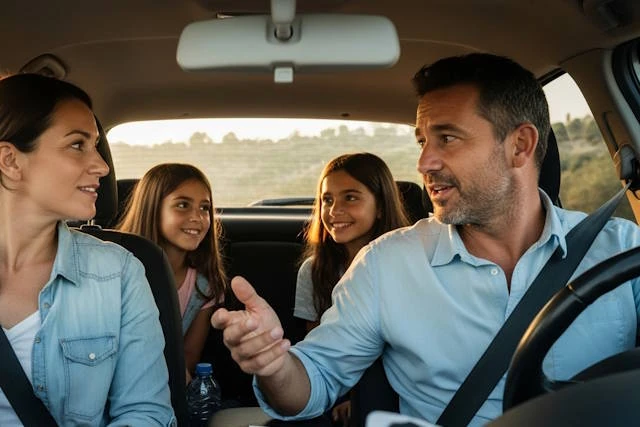
Physical movement creates emotional movement. When the body moves at a steady pace‚ thoughts clear and the heart opens. A shared walk or a car ride allows a flowing conversation‚ one that is not interrupted by every glance. The slight distance from direct eye contact reduces tension‚ and the conversation takes on a natural rhythm. There is no need to "start a conversation" - it simply begins to move alongside the feet or the wheels.
The Link Between Daily Tasks and Effortless Talk
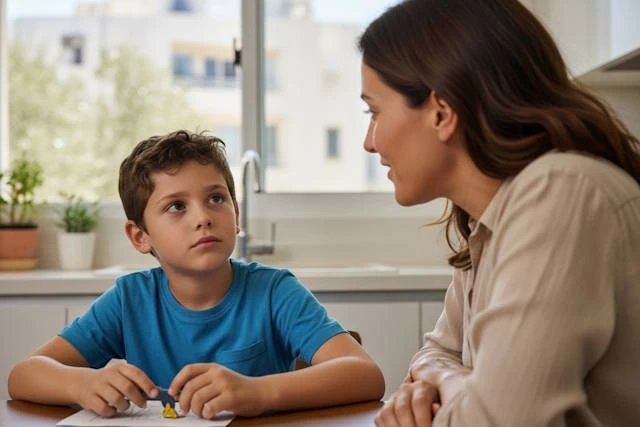
Simple household chores - folding laundry‚ tidying a room‚ washing dishes - provide a rhythmic background that allows thinking. When the hands are busy‚ the mind lets itself release words. Sensitive topics suddenly sound possible because they are slipped into a familiar activity. In this routine there is no test‚ only space.
Choosing In-Between Time as an Emotional Window
Between home and school‚ between an after-school activity and home‚ between day and night - transition times mark a chapter that ends and a chapter that begins. At those moments an inner need arises to sum up‚ to unload or to share. The road provides a gentle context that holds the story without weighing it down. A short sentence can become a long conversation‚ if only there is room to breathe.
The Link Between Looking Ahead and Emotional Safety
When you sit side by side - in the front and back seats‚ on a walking path‚ on a park bench - the gaze is not demanding. A delicate feeling finds itself a safe passage. The absence of visual confrontation reduces the need to defend‚ and the message is received easily. Out of this quiet‚ trust thickens and words gain courage.
Choosing a Shared Breathing Rhythm
Walking at a steady pace synchronizes breathing. Shared presence becomes another physical experience that feels like "we are together". This gentle synchronization reduces tension and creates a sense of partnership. Within that partnership a conversation is born that is based on "together" and not on "against".
The Link Between Micro-Moments and the Big Picture
Short conversations repeated again and again build a long-term story. Not every talk has to be "big". Sometimes one clarifying sentence today will connect to a small question tomorrow and a smile next week. This is how a deep familiarity builds up‚ layer upon layer‚ until it feels like a shared language has a home.
Choosing Gentle Curiosity Without a Test
When the road is relaxed‚ curiosity becomes polite as well. Light questions‚ soft observations and echoes of what was said - all of these preserve a sense of freedom. Words flow because there is no need to justify them. When there is no test‚ there is no need for "right" answers‚ only for honesty.
The Link Between Planned Silence and a Moment of Discovery
Small pauses create room for thought. Silences are not a gap to be filled but soil in which a new thought sprouts. Precisely this tool - a short silence in the middle of the road - invites the other side to continue. The conversation deepens at a natural pace without being dragged into pressure.
Choosing Tiny Signals as Emotional Bridges
Small signals - a nod‚ a sideways smile‚ a hand lightly held out at a crosswalk - show listening. On the road these signals stand out more than words. They anchor the feeling that someone is "with us" even without much talking. A real conversation feeds on these signals no less than on sentences.
The Link Between Road Memories and the Family Story
Routes that repeat themselves build up into memories. The same right turn‚ the same corner store‚ the same tree - they all become markers in an ongoing story. Inside the familiar route it is easier to talk about what is less familiar: a new fear‚ an old dream‚ a thought that is not yet settled. The familiar holds the unfamiliar.
Choosing Small Rituals That Build Security
Recurring rituals along the way - a regular song at the start of a drive‚ a hot drink before a walk‚ a private joke at a traffic light - create anchors. These anchors hold stability‚ and through it it is easy to share even when the day was stormy. The ritual is not a goal in itself but a soft bridge to conversation.
The Link Between Acknowledging Feelings and Widening the Conversation
When feelings are called by their names‚ the conversation widens. Simple statements like "sounds like it was tiring" or "it seems there is a lot of excitement in the air" reflect understanding. There is no need to analyze‚ only to acknowledge. Acknowledgment widens the space and invites more layers of truth.
Choosing Little Preaching and Plenty of Trust
On the road‚ when time is limited and the pace is steady‚ there is no room for lectures. The tone becomes restrained‚ the words short and the respect mutual. Out of avoiding a judgmental tone‚ a sense of trust is born. Trust makes it possible to tell even the unpleasant things without fear of immediate punishment.
The Link Between Road Games and Loosening Tongues
Light observation games - counting orange windows‚ inventing stories about passersby‚ reading signs together - release stiffness. A little laughter makes room for big words. Gentle humor lowers the threshold‚ and then serious topics open up without effort.
Choosing Drive Time as a Closed and Safe Space
A moving car creates a bubble. The world outside passes by; inside there is relative quiet. It is a bubble that allows a secret‚ a half-sentence‚ a first thought that has not yet taken shape. The feeling that the moment is "ours" creates security. When the bubble is constant‚ so is the trust.
The Link Between the Pace of the Day and the Pace of Conversation
A conversation in the middle of the road feels natural when it responds to the pace of the day. Some days bring humor‚ and some days bring quiet. Listening to this rhythm saves unnecessary effort. The conversation is not pressed into a template; it runs like the sidewalk - sometimes wide‚ sometimes narrow‚ always moving forward.
Choosing a Shared Language That Develops on the Way
Many families develop a "road language" - short words‚ inside signs and hints everyone understands. This language is not written down‚ but it sketches a home culture. Within it there is security to talk even about the delicate and fragile‚ because an agreement of compassion already exists.
The Link Between Predictable Times and Pleasant Anticipation
When it is known that there is an evening walk twice a week or a regular morning drive‚ an anticipation of conversation is created. Knowing there will be a road together makes a busy day easier. This anticipation calms in advance‚ and the heart prepares for a small release. A good routine is an open invitation to words.
Choosing Emotional Flexibility Over Sticking to a Schedule
The road invites flexibility. If a heavy topic comes up‚ you can extend the loop. If tiredness takes over‚ you can cut it short. Flexibility creates a sense of shared control. When nothing is forced‚ the conversation stays lively and does not wear out.
The Link Between Reflection and Keeping a Good Memory
At the end of the road‚ a short closing sentence preserves the good: a word of thanks for sharing‚ a smile that shows the conversation mattered. This memory accumulates‚ and the next time comes more easily. This is how the road becomes an emotional tradition.
Choosing to Be Generous with Time Even When the Calendar Is Full
Ten minutes can be enough. A whole evening is not always needed. Generosity with a tiny but consistent amount of time sends a deep message: your place matters. This message is not spoken in slogans; it is recorded in the rhythm of the steps.
The Link Between Mutual Trust and the Chance to Repair
Even when a sharp word is spoken or a misunderstanding arises‚ the road allows immediate repair. The flexible space absorbs it‚ and the pace continues. Instead of getting stuck in a room‚ the conversation moves on‚ and each side feels there is a new chance just one turn away.
Choosing to See the Road as Part of Home
When you understand that important conversations do not depend on a certain couch or a specific table‚ home expands. The way to school‚ the path to the garden‚ the elevator - all become mobile conversation rooms. Home goes out into the world‚ and the conversation goes out with it.
In Summary
Real conversations happen right in the middle of the road because the road releases expectations‚ softens gazes and unifies pace. Physical movement creates mental movement‚ and a steady routine becomes a safe basis for emotional expression. Out of walking‚ driving or quiet activity‚ words are born that do not always find their place around a formal table. When the in-between spaces are allowed to become central‚ family ties and friendships fill with new layers of listening‚ gentleness and trust. In the end‚ it is not the destination that defines the connection but the road - step by step‚ word by word‚ heart beside heart.